Why I Built CoachMetrics
Coaches lose 30–50% of their clients every year and most have no idea why. The answer was always in the data. They just had no way to see it.
Did you know the average fitness coach loses 30 to 50% of their clients every year — and most of them never find out why?
Not because they're bad coaches. Not because their programs don't work. But because they had no data. They were flying blind, and by the time they noticed something was wrong, the client had already made their decision.
I've been in the fitness industry for 23 years. I started training at 18, competed professionally, and have coached hundreds of clients. And for most of those years, I operated exactly the same way — on gut feeling, on memory, on hoping I'd notice when someone started pulling away.
I didn't always notice in time.
The Difference Between Businesses That Scale and Ones That Don't
There's a reason some businesses grow and others plateau.
It's not always the better product. It's not always the better marketing. More often than not, it comes down to one thing: the ones that scale know their numbers. The ones that plateau are guessing.
Data tells you what's working before it stops working. It shows you patterns your brain can't hold. It removes the guesswork — and in business, guesswork is expensive.
Fitness coaching is no different. The coaches who retain clients year after year aren't necessarily the most talented. They're the ones who know what's happening with their clients at all times — who's engaged, who's slipping, who needs a check-in today before it becomes a cancellation next week.
The Dark Place Every Coach Knows
Here's what it actually feels like when a client is disengaging and you have no data:
You notice they've been quieter than usual. You tell yourself they're just busy. A session gets rescheduled. Then another. Their replies get shorter. You start asking yourself — is it something I said? Is it the program? Are they not seeing results? Is it me?
You waste energy on a question you can't answer because you have no information. You're trying to solve a problem in the dark.
And while you're guessing, the client is mentally moving on.
By the time they cancel, they've already been gone for weeks. You just didn't know it.
Keeping a Client Is Always Better Than Finding a New One
This is something every business owner knows but coaches don't talk about enough.
Acquiring a new client costs time, energy, and money. You market. You sell. You onboard. You build trust from zero.
Keeping an existing client? That costs a conversation. A check-in. An adjusted program. A message that shows you noticed and you care.
When you have data, you know exactly when to send that message. When someone's sleep score drops, when they miss two check-ins, when their engagement goes quiet — that's the moment. Not two weeks later when they've already decided.
One saved client pays for a full year of CoachMetrics. I'm not saying that as a sales line. I'm saying it because I've done the math and lived it.
It's Not Just Better for You. It's Better for Your Client.
This is the part most people miss.
When a coach has no data, they give generic advice. They have to. They're working from impressions, from what the client tells them in sessions, from what they remember. They can't tailor to what's actually happening in that person's life between sessions.
When you have data — sleep scores, recovery, workout consistency, attendance — you stop guessing and start coaching with precision. You know the client isn't skipping sessions because they're lazy. You know their sleep crashed three weeks ago and everything else dropped with it. You reach out differently. You adjust differently. The advice stops being generic and starts being exactly what that person needs right now.
That's better for them. And it's the difference between a coach who gets results and a coach who loses clients and never knows why.
Why I Built This
I lost a client I shouldn't have lost.
She'd been with me for eight months. Showing up, hitting her numbers, messaging me after sessions. Then slowly she wasn't. Sessions got shorter. Responses got slower. One day she didn't show. A week later she cancelled.
When I went back through everything, the signals had been there for three weeks. Sleep scores dropping. Check-ins missed. Engagement gone. Every indicator pointing to "this person is about to quit." I had no system to surface that. I was looking at each data point individually, manually, when I remembered to look at all.
I tried spreadsheets. I tried calendar reminders. I tried gut instinct. None of it scaled. None of it was fast enough.
So I built CoachMetrics.
What It Does
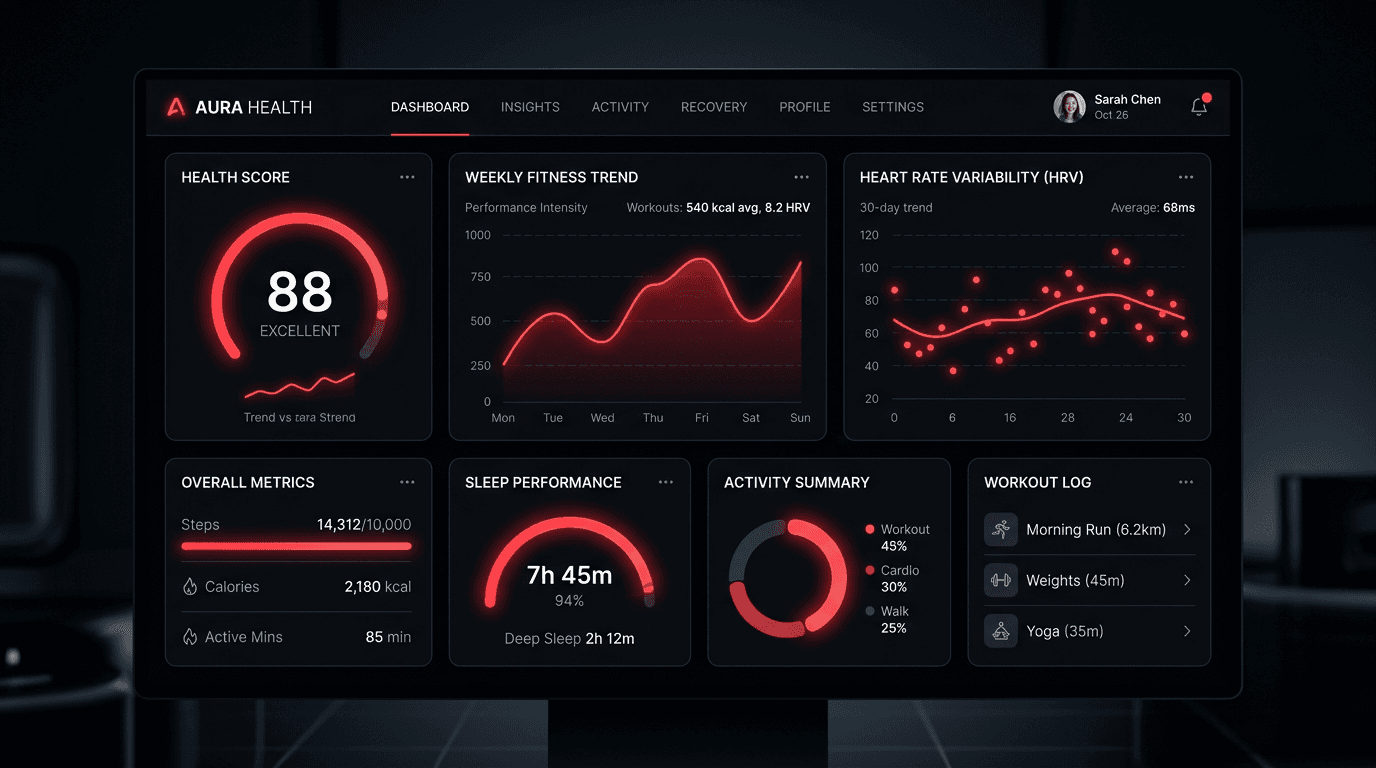
Every client gets a Health Score from 0 to 100, calculated automatically from their workout completion, sleep, recovery scores, and check-in attendance. When that score drops below a threshold, you get an alert. When it goes critical, you get an email that morning — before your day starts.
The Pro and Agency plans add AI on top of that. For every at-risk client, it reads their recent data and generates a specific outreach message tailored to what that person has actually been experiencing. Not a template. An actual message you can send.
And it shows you the revenue at risk in real dollars. Because losing a client isn't abstract — it's $100 or $200 a month, gone, that you now have to go replace.
Why I'm Writing About It
I'm building this in public because I think you deserve to know who built the tool you're trusting with your business.
I'm not a software company. I'm a coach who had the problem, built the solution, and wants other coaches to stop losing clients they could have saved.
If you're a coach, I hope this is useful. If you've lost a client recently and still don't know why — that's exactly why this exists.
CoachMetrics is free for up to 5 clients. No credit card required. Start here.
Try CoachMetrics
Stop losing clients you could have saved
Free for up to 5 clients. No credit card required.
Start Free